Working together
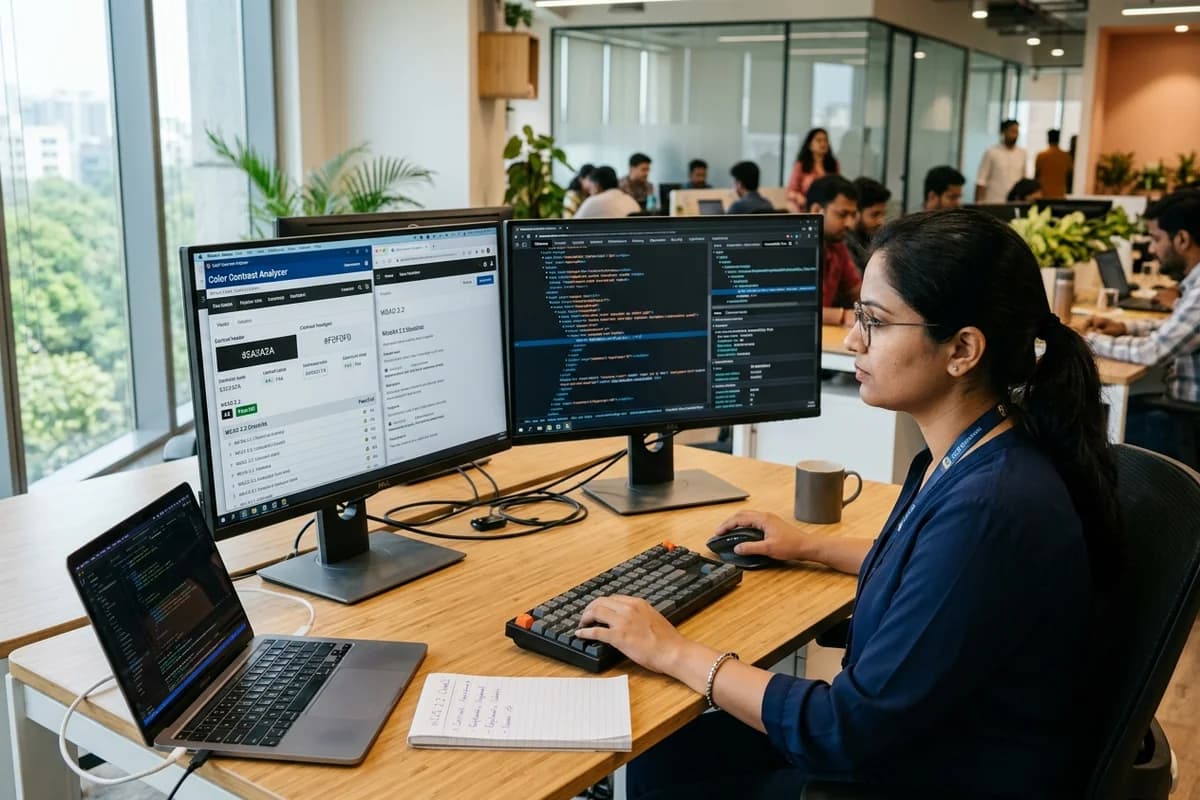
We build to WCAG 2.2 AA as a delivery requirement rather than a later audit, and we state what is tested and what is not. Accessibility claimed without testing is a claim, not a commitment.
What we commit to
The requirements are set before design, because retrofitting them is where accessibility budgets go.
Colour contrast verified rather than eyeballed, target sizes that meet the standard, a heading structure that survives editing, visible focus states, and forms with real labels and error messages.
What we test automatically: contrast ratios against the tokens, target sizes, heading order, alternative text presence, and keyboard reachability of every interactive element. What automated testing cannot judge (whether alternative text is useful, whether an error message is comprehensible, whether a flow makes sense with a screen reader) is checked manually.
What we do not claim is a conformance certificate. Automated checks catch a minority of real accessibility problems, and a site can pass every one of them while remaining difficult to use. Where a project needs formal conformance, that requires a specialist audit including testing with people who use assistive technology.
Reduced motion is honoured throughout, because vestibular triggers are not a preference. Any animation on a site we build collapses to an opacity change when the operating system asks for it.

We build to WCAG 2.2 AA as a delivery requirement rather than a later audit, and we state what is tested and what is not. Accessibility claimed without testing is a claim, not a commitment.
Everything above is how we say we work. Thirty minutes on a real problem is the fastest way to find out whether it is also how we behave — and it costs you nothing to check.